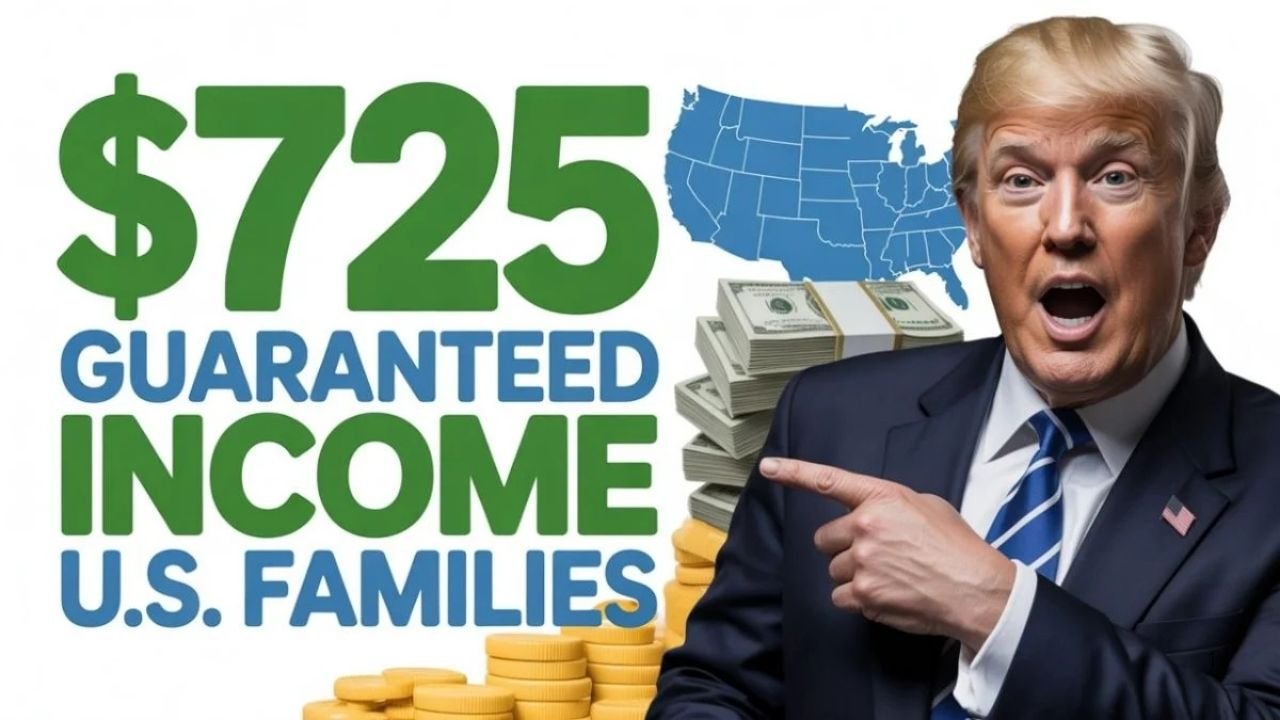
The approval of a proposed $725 guaranteed income program has generated widespread attention across the United States. As households continue to navigate higher living costs, healthcare expenses, housing pressures, and economic uncertainty, the idea of a predictable monthly payment has strong appeal. Beyond the dollar amount itself, the program reflects a broader shift in how economic security and family stability are being discussed at the national level.
Guaranteed income initiatives are increasingly viewed as tools to strengthen financial resilience, reduce stress, and support long-term planning. While not a universal payment for all Americans, the $725 program represents one of the most ambitious income-support pilots to date, with implications that extend well beyond its immediate participants.
Understanding Guaranteed Income Programs

Guaranteed income programs provide individuals or households with regular, fixed cash payments, typically without strict conditions. The primary goal is to ensure a basic level of financial stability so recipients can meet essential needs such as housing, food, utilities, healthcare, and education.
Unlike traditional welfare systems, guaranteed income initiatives emphasize simplicity and autonomy. Payments are not tied to employment status, job searches, or mandatory training programs. This unconditional structure is designed to reduce administrative complexity while allowing families to make decisions that best reflect their real-life priorities.
The $725 monthly payment stands out for its size and scope, making it a significant test case for evaluating whether guaranteed income can meaningfully improve household stability in the modern U.S. economy.
Who Is Likely to Qualify

Eligibility plays a central role in determining the reach and impact of the program. While details vary depending on how and where the initiative is implemented, most guaranteed income pilots focus on low- to moderate-income households facing persistent financial pressure.
Common eligibility factors may include income limits, household size, residency requirements, and participation within designated communities or regions. Some pilots also prioritize families with children, caregivers, young adults aging out of foster care, or individuals facing housing insecurity.
It is important to note that the $725 payment is not expected to be automatic for all Americans. Instead, it is structured to target households where additional monthly income can make the greatest difference, especially in stabilizing budgets and preventing financial emergencies.
How the $725 Program Works

Once approved and implemented, eligible participants receive $725 per month through direct deposit or approved payment methods. The process is designed to be efficient and user-friendly, minimizing paperwork and delays.
Recipients are not required to spend the funds on specific categories. This flexibility is a defining feature of guaranteed income. Families may choose to use the payment for rent, groceries, childcare, transportation, medical costs, debt repayment, or savings.
By trusting recipients to allocate resources according to their needs, the program supports financial independence while acknowledging that households face different challenges at different stages of life.
Financial and Lifestyle Impact on Families
For many families, an additional $725 per month can significantly reduce financial strain. It may help cover a portion of rent or mortgage payments, offset grocery and utility bills, or provide breathing room in tight budgets. Over time, this stability can reduce reliance on credit cards, payday loans, or other high-interest debt.
Research from similar guaranteed income pilots suggests broader benefits as well. Participants often report lower stress levels, improved mental health, and a greater sense of control over their financial future. The psychological impact of knowing that a fixed amount will arrive each month can be as meaningful as the financial support itself.
Stable income also allows families to plan ahead, whether that means saving for emergencies, investing in education or skills, or managing healthcare needs more proactively.
Guaranteed Income vs. Traditional Assistance
Guaranteed income programs differ fundamentally from traditional assistance models. Conventional programs often require extensive documentation, periodic recertification, and compliance with work or spending rules. While these systems aim to ensure accountability, they can also create barriers and administrative burdens.
In contrast, guaranteed income emphasizes trust and efficiency. Payments are typically unconditional, easier to administer, and faster to distribute. This approach reduces bureaucracy while respecting the ability of individuals to manage their own finances responsibly.
Importantly, guaranteed income is often designed to complement existing benefits rather than replace them, providing additional support without disrupting essential safety-net programs.
Broader Economic and Policy Implications
The $725 guaranteed income program is closely watched by policymakers, economists, and researchers. As a pilot or limited-scale initiative, it serves as a real-world test of how direct cash support influences employment decisions, consumer spending, and overall economic stability.
Early evidence from similar programs suggests that guaranteed income does not significantly reduce workforce participation. Instead, it may enable people to pursue better job opportunities, education, or caregiving responsibilities without the constant pressure of financial insecurity.
Insights gained from this program could influence future legislation and reshape conversations around poverty reduction, workforce resilience, and the design of social support systems.
Challenges and Key Considerations
Despite its potential, the program also faces challenges. Long-term funding is a major consideration, as sustained monthly payments require reliable financial resources. Policymakers must balance innovation with fiscal responsibility to ensure that programs remain viable over time.
Equity and transparency are equally important. Selection processes must be clear and fair, particularly in pilot phases where participation may be limited. Administrators also need to monitor potential unintended effects, such as localized housing cost increases or unequal access across communities.
Addressing these challenges thoughtfully will be critical to determining whether guaranteed income can scale effectively.
Making the Most of the Monthly Payment
Families who receive the $725 payment can maximize its impact through strategic planning. Creating a simple budget, prioritizing essential expenses, and setting aside even small amounts for savings can strengthen long-term financial security.
Some households may use the funds to reduce debt, invest in education or certifications, or build an emergency cushion. Used intentionally, guaranteed income can become a foundation for stability rather than just short-term relief.
Conclusion
The $725 guaranteed income program represents a meaningful step in rethinking how financial support is delivered to American families. By providing predictable, flexible monthly payments, the initiative aims to reduce economic stress, support household stability, and generate valuable insights into the future of income assistance.
While not a universal solution, the program highlights a growing willingness to explore innovative approaches to economic security. As data emerges and experiences accumulate, the lessons learned from this initiative may play a significant role in shaping future policies and strengthening the financial well-being of families across the United States.