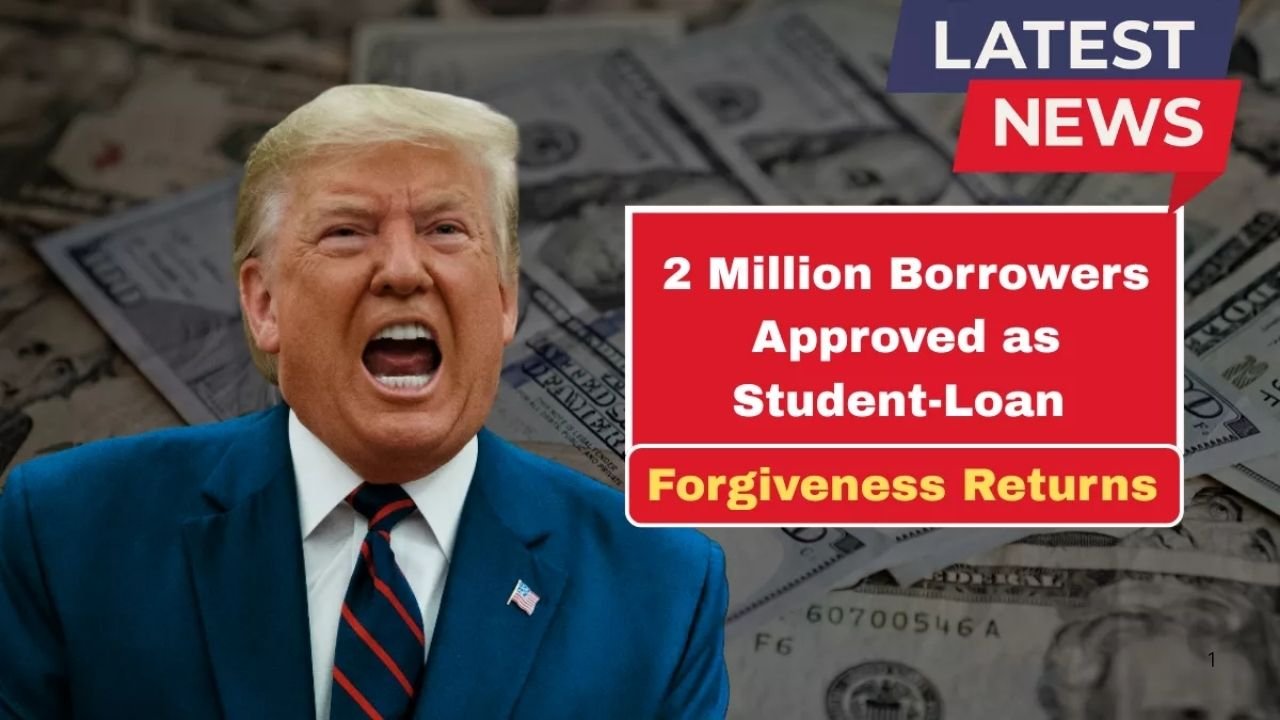
Student loan forgiveness has returned to the national spotlight in December 2025, as confirmation emerges that close to 2 million borrowers have already received approval under revived and expanded federal relief efforts. For millions of Americans burdened by education debt for years or even decades, this development represents more than a policy update—it signals a tangible shift toward long-term financial relief.
After months of uncertainty and legal debate surrounding broader forgiveness plans, the focus has now turned to existing federal programs that were quietly recalibrated and corrected. These changes have unlocked forgiveness for borrowers who were already eligible under the rules but were previously overlooked due to administrative gaps.
Why Student Loan Forgiveness Is Back in Motion

The renewed wave of student loan forgiveness is not the result of a single new law or sweeping announcement. Instead, it stems from a comprehensive administrative review of long-standing repayment programs, particularly income-driven repayment plans and public service pathways.
For years, many borrowers made consistent payments under these programs without receiving proper credit toward forgiveness. Errors in loan servicing, outdated tracking systems, and inconsistent record-keeping meant that qualifying payments were not always counted correctly. Recent system updates and account audits have allowed federal agencies to correct these discrepancies, leading to a sharp increase in approved forgiveness cases.
This approach focuses on enforcing existing rules rather than introducing entirely new ones, making the relief more durable and less vulnerable to policy reversals.
Who the Approved Borrowers Are

The borrowers receiving forgiveness approvals largely fall into a few well-defined categories. One major group includes individuals enrolled in income-driven repayment plans who have made payments for 20 to 25 years, meeting the required repayment period under federal guidelines.
Another significant group consists of public service employees, including teachers, healthcare professionals, and government workers. Many of these borrowers qualified for forgiveness after completing the necessary years of service but experienced delays due to processing errors or incomplete records.
Additionally, borrowers whose loans exceeded their repayment timelines due to accumulated interest or restructuring are now seeing balances cleared after long-overdue eligibility reviews. In many cases, these individuals had already repaid amounts close to or exceeding their original loan balances.
Programs Driving the Current Forgiveness Wave

Several federal programs are playing a central role in this resurgence of student loan forgiveness. Income-driven repayment plans are at the core, particularly those designed to adjust monthly payments based on earnings and family size while offering forgiveness after a defined period.
Targeted relief initiatives within the federal loan system are also contributing. These programs address specific borrower circumstances, such as prolonged repayment histories or service-based eligibility, ensuring that relief reaches those who have met program requirements but were previously left behind.
Rather than requiring borrowers to submit new applications, many approvals are being processed automatically as accounts are reviewed and updated.
What Forgiveness Means for Borrowers Financially
For borrowers receiving approval, forgiveness can result in either partial or full cancellation of remaining federal student loan balances. This can translate into immediate relief from monthly payments, reduced financial stress, and improved credit profiles over time.
The impact extends beyond the loan itself. Eliminating or significantly reducing student debt can free up income for savings, housing, retirement planning, or investment opportunities. For older borrowers, in particular, forgiveness can ease the strain on fixed incomes and long-term financial planning.
In many cases, account updates are happening automatically, with borrowers notified once balances are adjusted. While processing timelines vary, approvals confirm that forgiveness is being actively implemented rather than simply discussed.
How the Approval Process Is Being Managed
Federal agencies and loan servicers are handling approvals in structured batches to manage volume and ensure accuracy. Borrowers who qualify are receiving notifications directly through their loan accounts or official communications.
Although approval confirms eligibility, it may take additional time for loan dashboards to reflect zero balances or updated figures. This delay is part of the standard processing cycle and does not typically indicate a problem with the approval itself.
Importantly, borrowers are not being asked to take immediate action in most cases. The focus is on correcting records and applying forgiveness automatically wherever possible.
What Borrowers Should Pay Attention To Next
Even with approvals underway, borrowers are encouraged to stay engaged with their loan information. Reviewing repayment histories, confirming enrollment in the correct repayment plan, and ensuring contact details are current can help avoid delays or confusion.
Ongoing account reviews mean that additional borrowers could still qualify in future phases. Those who believe they meet forgiveness criteria but have not yet received notification should monitor official communications closely and check their loan dashboards for updates.
Remaining informed is especially important as administrative reviews continue and program adjustments evolve.
Why This Moment Matters
The approval of student loan forgiveness for nearly 2 million borrowers represents one of the most significant relief milestones in recent years. Rather than relying on broad, one-time cancellations, this approach strengthens the integrity of existing programs and restores trust for borrowers who followed the rules but were previously underserved.
At a time when education costs remain high and household budgets are under pressure, this renewed focus on accountability within the student loan system offers meaningful, lasting benefits. It demonstrates that long-term repayment commitments and public service contributions are being recognized and rewarded as intended.
Conclusion
The return of student loan forgiveness in December 2025 marks a pivotal moment for millions of borrowers across the United States. With nearly 2 million approvals already confirmed, the emphasis on correcting past errors and honoring existing program rules is delivering real financial relief. For those approved, it represents a decisive step toward reduced debt, greater financial stability, and renewed confidence in the student loan system.