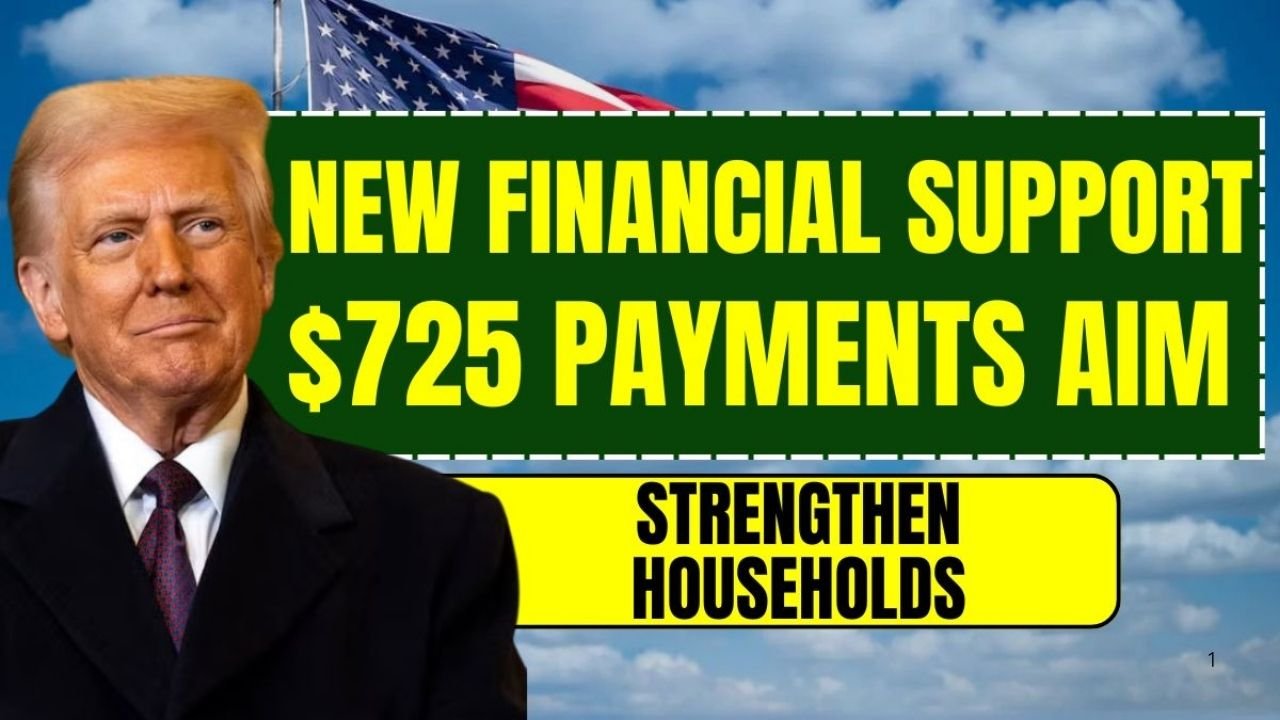
As inflation continues to reshape household budgets, families across the country are navigating a challenging financial landscape. Rising costs for housing, utilities, groceries, healthcare, and education have placed sustained pressure on middle- and lower-income households. In response to these realities, a new financial support initiative offering $725 payments has been introduced to help families regain stability and confidence. This program is designed not only to provide immediate relief, but also to strengthen long-term household resilience.
Background and Growing Need for Support
Over the past several years, economic uncertainty has become a defining feature of everyday life. Inflation has eroded purchasing power, while wages for many workers have struggled to keep pace. Families that were once financially secure now find themselves making difficult choices between essentials.

This environment has highlighted the importance of targeted financial assistance. Rather than broad measures that dilute impact, programs like the $725 household payment focus on families most affected by rising living costs, ensuring support reaches where it matters most.
Purpose of the $725 Payment
The $725 payment is structured as a practical and flexible form of assistance. Unlike restricted benefits, this payment allows households to allocate funds according to their most urgent needs. Whether it is rent, food, childcare, utilities, transportation, or medical expenses, families retain control over how the support is used.
The underlying philosophy of the program is simple: when households have a modest financial buffer, stress levels decline, decision-making improves, and families are better positioned to plan for the future rather than constantly reacting to emergencies.
Households Expected to Benefit Most

This program is aimed at families living on limited or fixed incomes, particularly those disproportionately impacted by inflation. Eligible households may include working families earning modest wages, single-parent households, families supporting elderly relatives, and those managing rising housing or healthcare costs.
Rather than focusing on a single demographic, the program recognizes the diverse ways financial strain manifests. By prioritizing income thresholds and household needs, the initiative seeks to deliver meaningful support without unnecessary barriers.
A Streamlined and Accessible Application Process
One of the defining features of this program is its simplified application process. In many cases, assistance programs fail to reach eligible families due to complex requirements or extensive paperwork. To address this issue, the $725 payment initiative emphasizes clarity, accessibility, and efficiency.

Online applications, reduced documentation requirements, and straightforward eligibility guidelines help ensure families can apply without confusion or delays. This approach acknowledges that time, access, and administrative complexity are often major obstacles for those who need help the most.
Immediate Impact on Daily Living
For households where budgets are already stretched thin, a $725 payment can make a noticeable difference. It may cover a month’s utility bills, offset a portion of rent, stock the pantry with nutritious food, or help manage transportation costs.
Beyond covering expenses, the payment provides peace of mind. Financial stress is one of the leading causes of anxiety in households. Even temporary relief can improve mental well-being, family dynamics, and overall quality of life.
Positive Effects on Children and Education
When families experience financial stability, children are often the greatest beneficiaries. Reduced financial pressure allows parents to focus more fully on their children’s education and development. School supplies, uniforms, digital learning tools, and extracurricular activities become more accessible.
Educational stability plays a crucial role in long-term economic mobility. By helping families meet education-related expenses, the program indirectly supports stronger academic outcomes and future opportunities for children.
Improved Health and Nutrition Outcomes
Financial hardship frequently leads families to compromise on health and nutrition. Skipping medical appointments, delaying prescriptions, or choosing lower-quality food are common coping strategies during difficult times.
The $725 payment can help households prioritize healthier food choices, access necessary medications, and seek preventative healthcare. Improved health outcomes not only benefit families individually but also reduce broader strain on healthcare systems.
Supporting Long-Term Economic Stability
While the payment offers immediate relief, its broader purpose is to encourage longer-term stability. Families with reduced financial pressure are more likely to save modest amounts, invest in skill development, or manage debt more effectively.
This stability creates a foundation for upward mobility. Over time, households with even small financial cushions are better equipped to handle unexpected expenses without falling into cycles of debt or crisis.
Broader Impact on Communities and the Economy
Household financial support programs also generate positive ripple effects throughout the economy. When families have spending power, local businesses benefit from increased demand. This supports job creation, strengthens local economies, and contributes to a healthier economic cycle.
Small retailers, service providers, and community-based businesses often see the most immediate benefits, reinforcing the value of targeted financial assistance as an economic stabilizer.
Public Confidence and Trust in the Program
Public response to the $725 payment initiative has largely been one of cautious optimism. Many households view the program as a sign that economic challenges are being acknowledged and addressed. Trust in public institutions tends to grow when policies reflect real-world needs and deliver tangible benefits.
This sense of trust is essential. Effective social support programs depend not only on funding, but also on public confidence that assistance will be delivered fairly, efficiently, and transparently.
Future Outlook and Program Potential
If the program demonstrates measurable success, it could serve as a model for future financial assistance initiatives. Adjustments such as extended payment periods, expanded eligibility, or increased payment amounts could further strengthen its impact.
Policymakers may also use insights from this program to better understand how targeted financial support influences household stability, economic participation, and overall well-being.
Conclusion
The introduction of the $725 financial support program represents a thoughtful and timely response to the pressures facing modern households. By offering flexible, accessible assistance, the initiative helps families meet essential needs, reduce stress, and move toward greater financial stability. In an era defined by economic uncertainty, programs like this demonstrate how targeted support can strengthen households, uplift communities, and contribute to a more resilient economy.